
Keeping your tyres at the correct tyre pressure is one of the simplest ways to stay safe, save fuel, and make your tyres last longer. Whether you drive around Nottingham or head out on longer trips, the right pressure matters. This guide explains how to find your recommended pressure, how to check and adjust it, and why it is so important.
Key Takeaways
- Find your correct tyre pressure on the driver’s door sticker, in the manual, or on the fuel flap.
- Check pressure when tyres are cold, at least once a month and before long journeys.
- Correct pressure improves safety, fuel efficiency, and tyre life.
- Most cars sit between 30 and 35 PSI, but always use your vehicle’s specific figure.
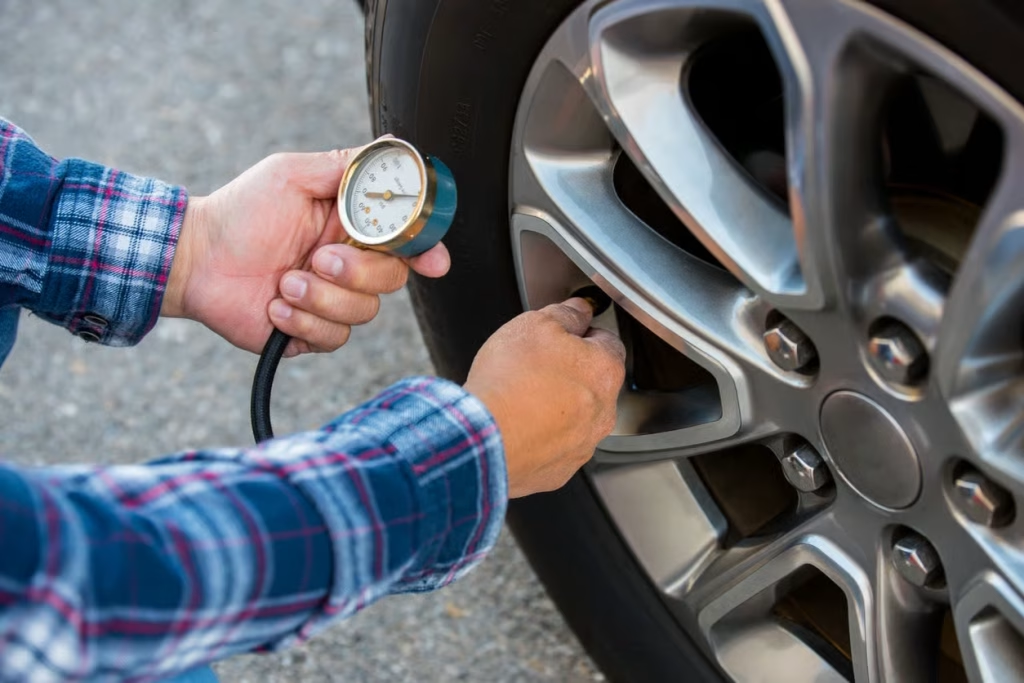
Why Correct Tyre Pressure Matters
Running the right pressure in every tyre affects your car in three key ways:
- Safety: Under-inflated or over-inflated tyres reduce grip and handling, which raises the risk of an accident.
- Fuel efficiency: Correctly inflated tyres roll with less resistance, so you use less fuel.
- Tyre life: Tyres wear evenly and last longer when kept at the right pressure, delaying the need for new tyres.
How to Find Your Vehicle’s Recommended Tyre Pressure
Finding the correct pressure for your car is easy. There are three reliable places to look.
Checking the Driver’s Door Jamb
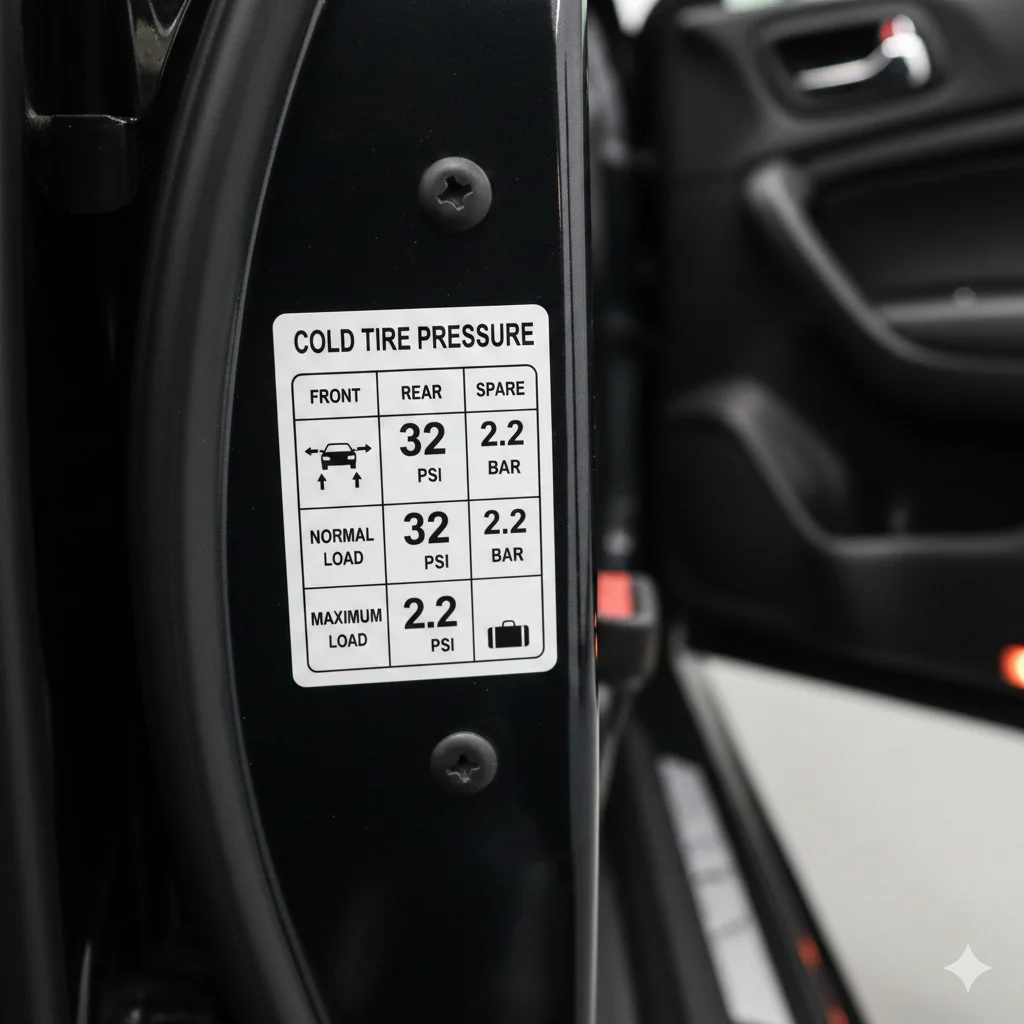
One of the most reliable spots is the sticker inside the driver’s door frame. It lists the manufacturer’s recommended pressure for both the front and rear tyres, and often a separate figure for a fully loaded car.
Consulting the Owner’s Manual
Your vehicle handbook is another dependable source. It gives full pressure information tailored to your exact make and model.
Using Online Tyre Pressure Checkers
Several online tools let you enter your registration or vehicle details to find the correct pressures. This is handy when you are away from the car and need a quick answer.
Understanding Tyre Pressure Units: PSI vs Bar
Tyre pressure is measured in either PSI (pounds per square inch) or Bar. In the UK you will see both. Converting between them is simple: 1 Bar is roughly 14.5 PSI. Knowing this makes sure you set the right figure at the pump.
How to Check and Adjust Tyre Pressure Step by Step
Keeping your tyres at the ideal pressure is straightforward if you follow these steps.
Tools You’ll Need
To check and adjust tyre pressure you will need:
- A reliable tyre pressure gauge
- An air compressor, available at most petrol stations
When to Check Tyre Pressure
Check your tyre pressure at least once a month and before any long journey. For the most accurate reading, check when the tyres are cold, either in the morning or after the car has been stationary for a few hours.
How to Check and Inflate Your Tyres
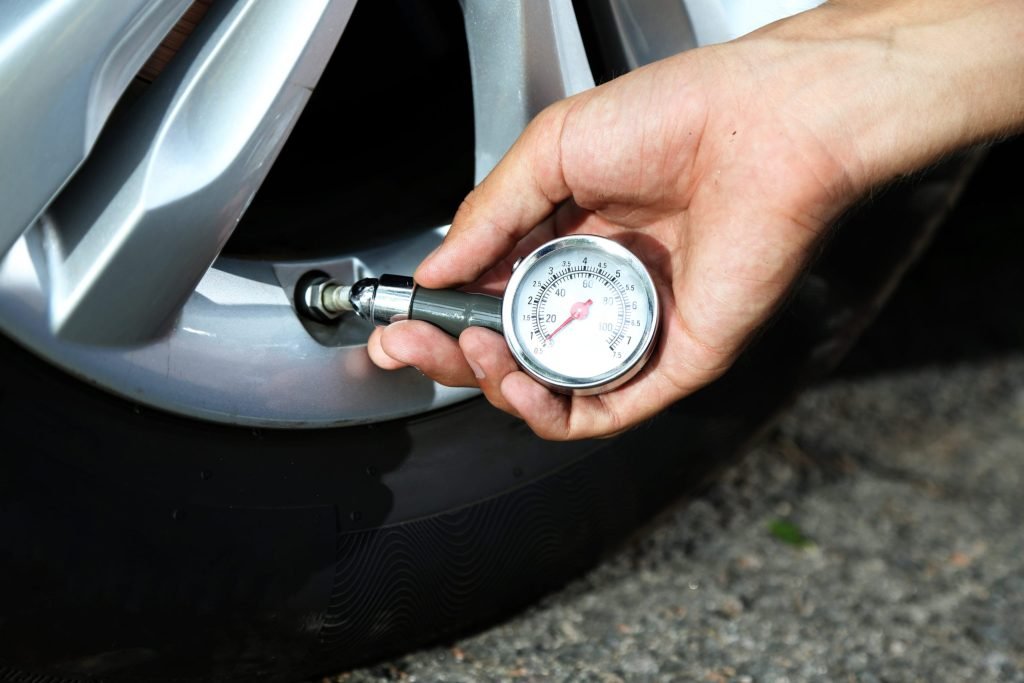
- Remove the valve cap and press the gauge firmly onto the valve stem.
- Read the gauge and compare it with your recommended level.
- If the pressure is low, use the air compressor to top the tyre up to the recommended level.
- Replace the valve cap and repeat for each tyre, including the spare.
Common Tyre Pressure Myths Debunked
A few common myths lead drivers astray:
- Myth: Higher pressure means better performance. Fact: Over-inflation reduces grip and causes uneven wear.
- Myth: You do not need to check tyres if they look fine. Fact: Regular checks are essential, as pressure drops naturally over time.
Tyre Pressure FAQs
What is the correct tyre pressure for my car?
The correct tyre pressure is set by your vehicle manufacturer, not the tyre. Find it on the sticker inside the driver’s door frame, in your owner’s manual, or on the fuel filler flap. It is usually between 30 and 35 PSI for most cars, but always follow your specific vehicle’s figure.
How often should I check my tyre pressure?
Check your tyre pressure at least once a month and before any long journey. Pressure drops naturally over time, so regular checks matter even if the tyres look fine.
Should I check tyre pressure when tyres are hot or cold?
Always check tyre pressure when the tyres are cold, meaning the car has been parked for a few hours or driven less than a couple of miles. Warm tyres read higher and give a false figure.
What happens if my tyre pressure is too low?
Under-inflated tyres reduce grip and handling, wear out faster on the edges, increase fuel use, and can overheat, which raises the risk of a blowout.
Can R2G Tyres check my tyre pressure in Nottingham?
Yes. You can pop into the R2G shop at Unit 6 Moreland Street, NG2 3GQ, or call out our 24/7 mobile tyre service and we will come to you anywhere in and around Nottingham.
R2G Tyres: Your Local Tyre Pressure Experts in Nottingham
For Nottingham drivers, R2G Tyres keeps your tyres in top condition, from routine pressure checks to full tyre maintenance. Come to the shop at Unit 6, Moreland Street, Moreland Place, Nottingham, NG2 3GQ, or use our fast, 24/7 mobile tyre fitting service and we will come to you. Proper tyre care means safer, more efficient driving, so get in touch if you have any questions or need a hand.